Chantry's Pantry

  • about
  • recipes
  • dressing guide
menu icon
go to homepage
  • about
  • recipes
  • dressing guide
    • Facebook
    • Instagram
    • Pinterest
  • subscribe
    search icon
    Homepage link
    • about
    • recipes
    • dressing guide
    • Facebook
    • Instagram
    • Pinterest
  • ×
    Home

    How to Deseed a Pomegranate

    January 24, 2019 by Chantry Leave a Comment

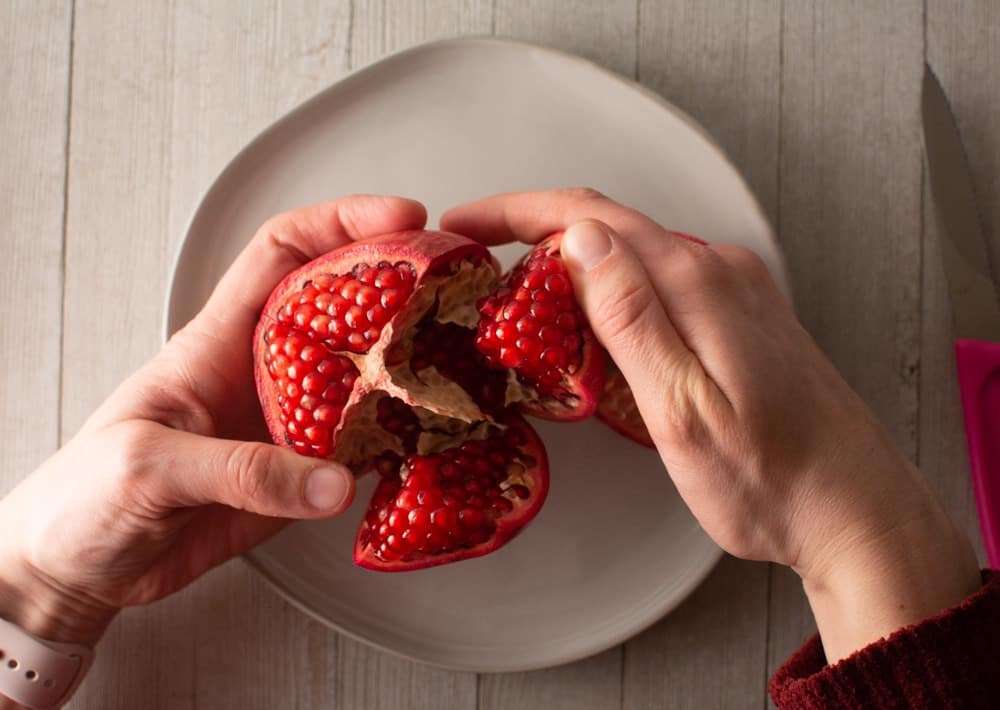
    two halves of pomegranate

    Have you ever wondered how to deseed a pomegranate without dedicating a day and a half to extracting each one? Those little crunchy, juicy, flavorful nuggets of joy sent straight from heaven?
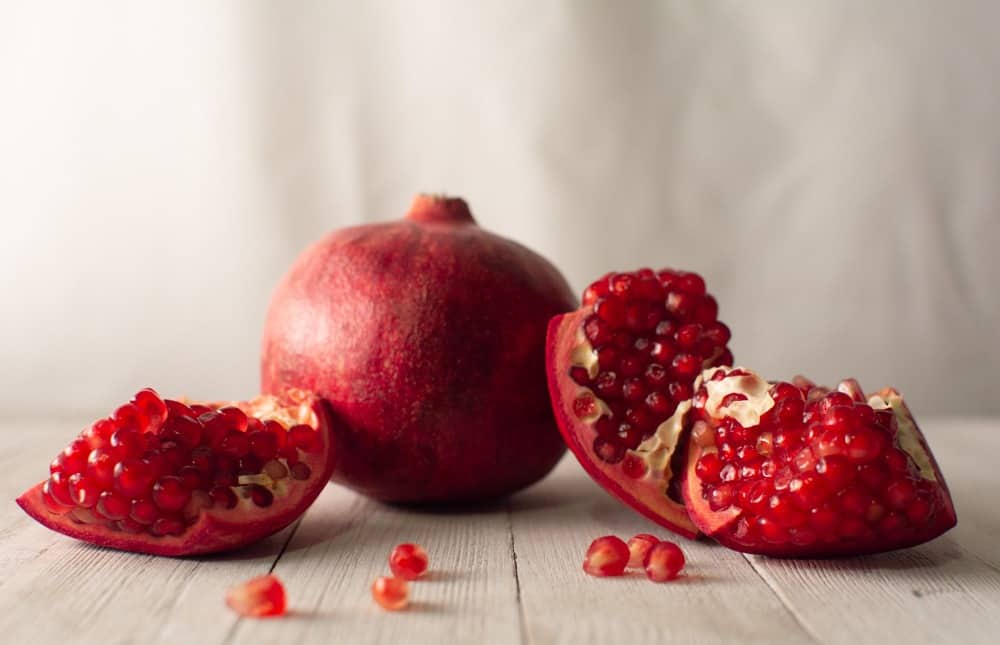
    The task is nowhere near as daunting as you might think. I promise, you’re only a few minutes away from those delectable morsels.

    When deseeding a pomegranate there are really only two things that you need to decide: (1) How to open or cut the pomegranate and (2) How to extract the seeds.

    My favorite methods for deseeding pomegranates are either cutting in half or making the flower and then whacking the pomegranate. It is fast and easy and I’m not looking for commitment.

    Cutting the Pomegranate

    There are a couple different ways to cut a pomegranate. Try out a few of them and see which one you like the best. Kind of like cracking an egg with one hand or two (or deciding either of those ways are just too complicated...), you’ll quickly develop a preferred method for accessing the treasures inside this wonderful fruit.

    One trick that you can use before any of these methods is to roll the pomegranate around on a hard surface with a little pressure to loosen up the seeds a bit. Sometimes this can make the deseeding process go a little smoother.

    Cutting Method #1: Cut in Half
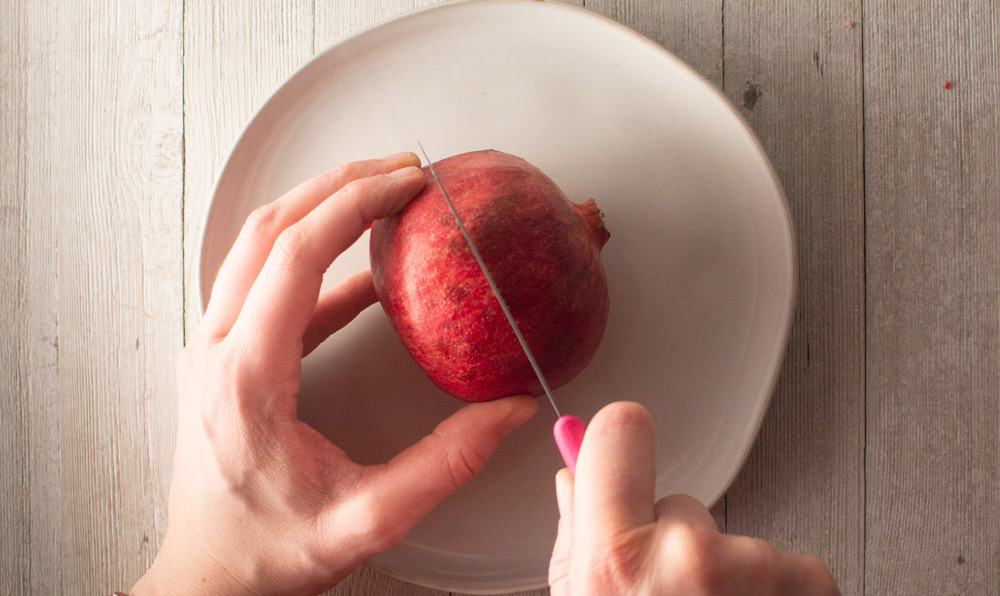
    Cutting pomegranate through equator

    The first way to cut a pomegranate is to cut it right in half. You still with me? Pretty simple right?  

    Many people advise against doing it this way because you end up cutting into a couple of the seeds and losing some juice. However, if you are cutting for yourself and not doing anything fancy with it just go for it. It is faster than the other methods. But if your pomegranate is on the small end than one of the other methods might be easier.
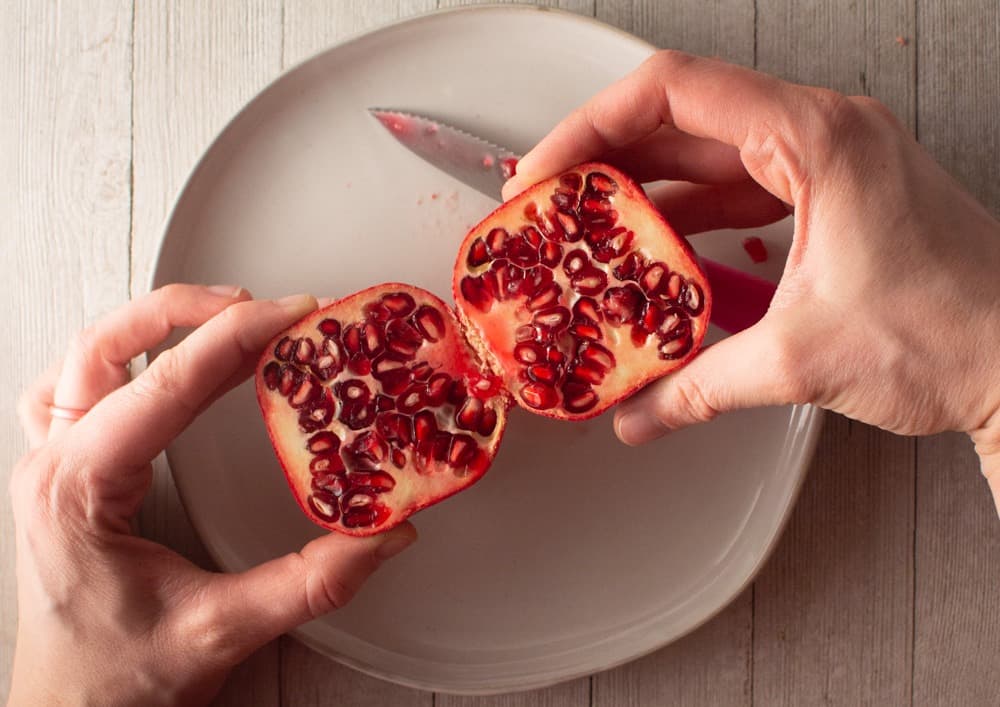
    two halves of pomegranate

    I use this method even when I am doing something fancy because the juice loss is minimal and I never even notice the two or three seeds that might have been harmed.

    Cutting Method #2: The Flower
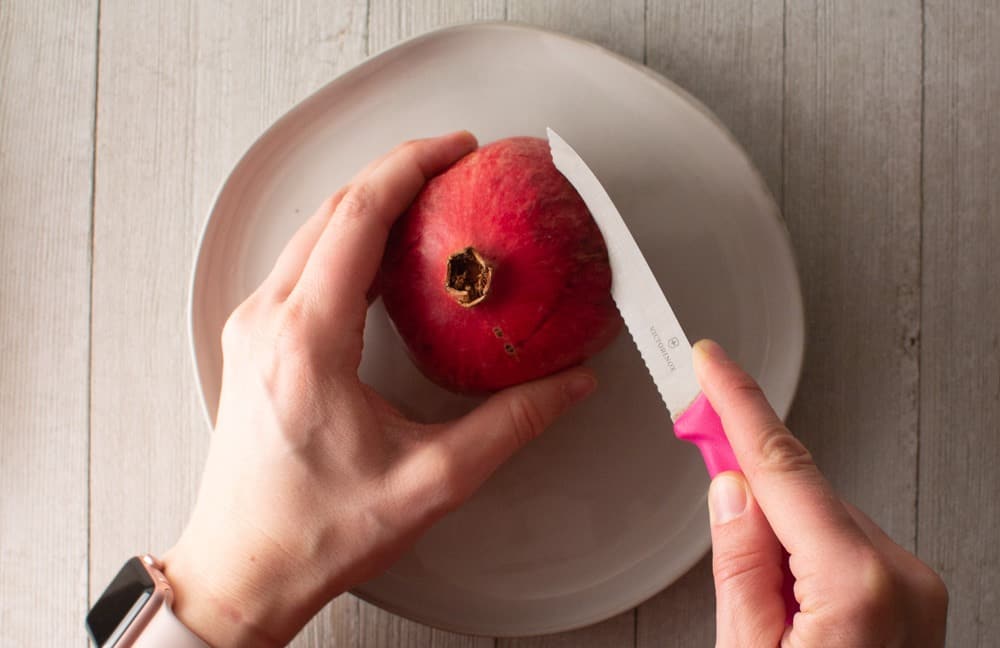
    Cutting pomegranate around calyx

    The second way to cut a pomegranate takes a little longer, but not much longer, and I think it’s pretty fun anyway.

    The first thing you need to do is find the calyx, or what I call the crown, of the pomegranate. Hint: It looks like a crown. Or a nob. Or an outie belly button on a pregnant lady.
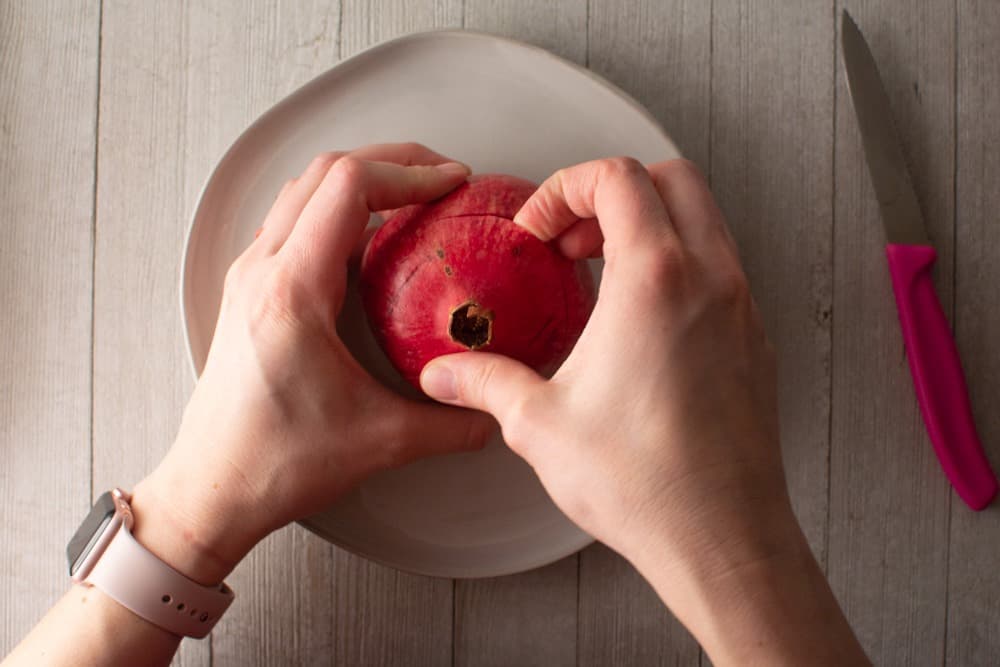
    Look down the fruit and locate where the slope starts to drop down the sides of the fruit. Cut a slit around the top of the pomegranate. Make sure you don’t cut too deep so you can avoid cutting the seeds.

    Next, gently pry the top off and and enjoy your first peek of those beautiful red seeds (or arils if you want to get technical.)
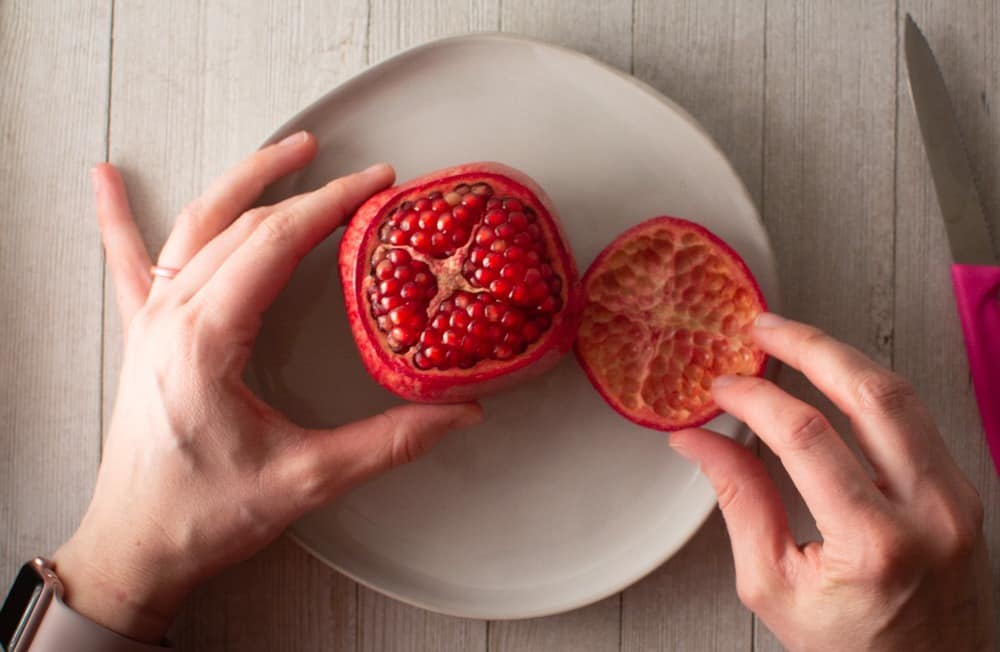
    Crown taken off pomegranate

    Now you are going to make three to four slits on the sides following the lines of the pith. Cut until you are about an inch or so from the bottom of the fruit.
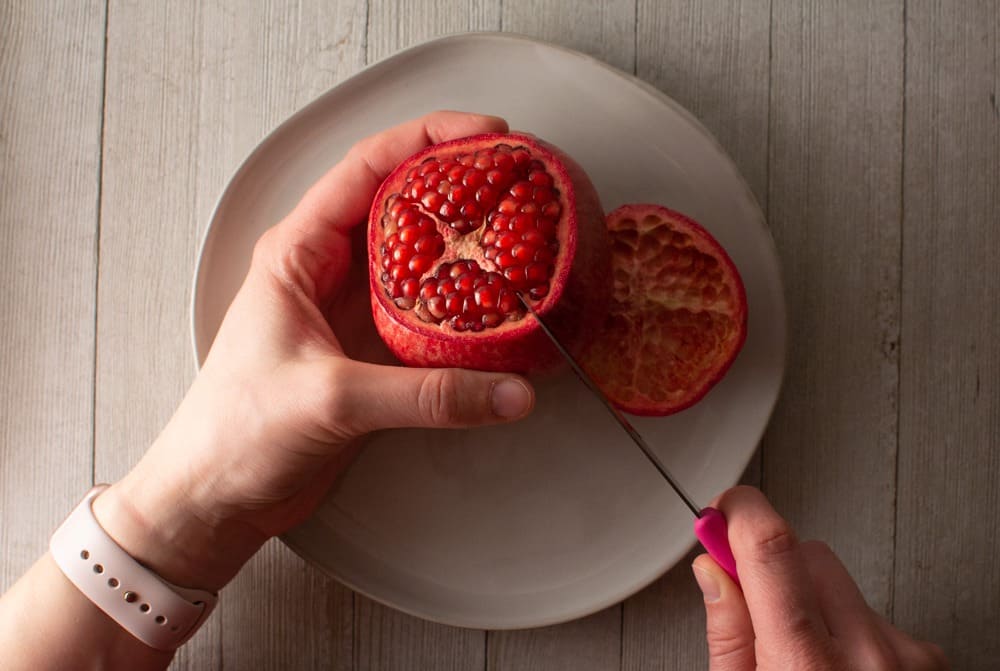
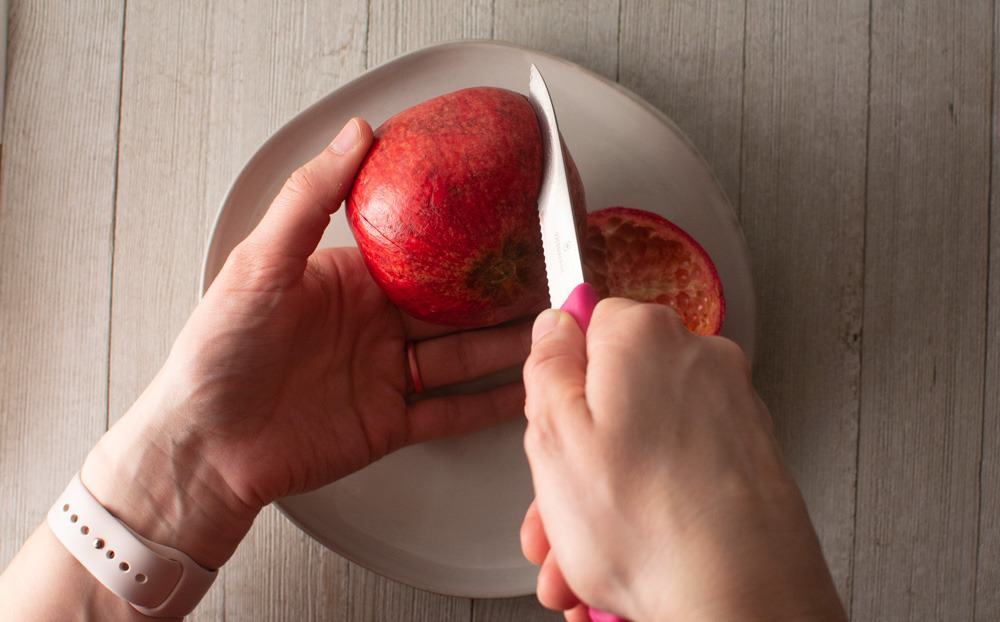
    Cutting down the side of pomegranate
    Cutting down not quite to the bottom
    Splaying open sides of pomegranate

    At this point, you should splay the pomegranate open like a flower and move on to the extraction process.

    Cutting Method #3: Separate wedges
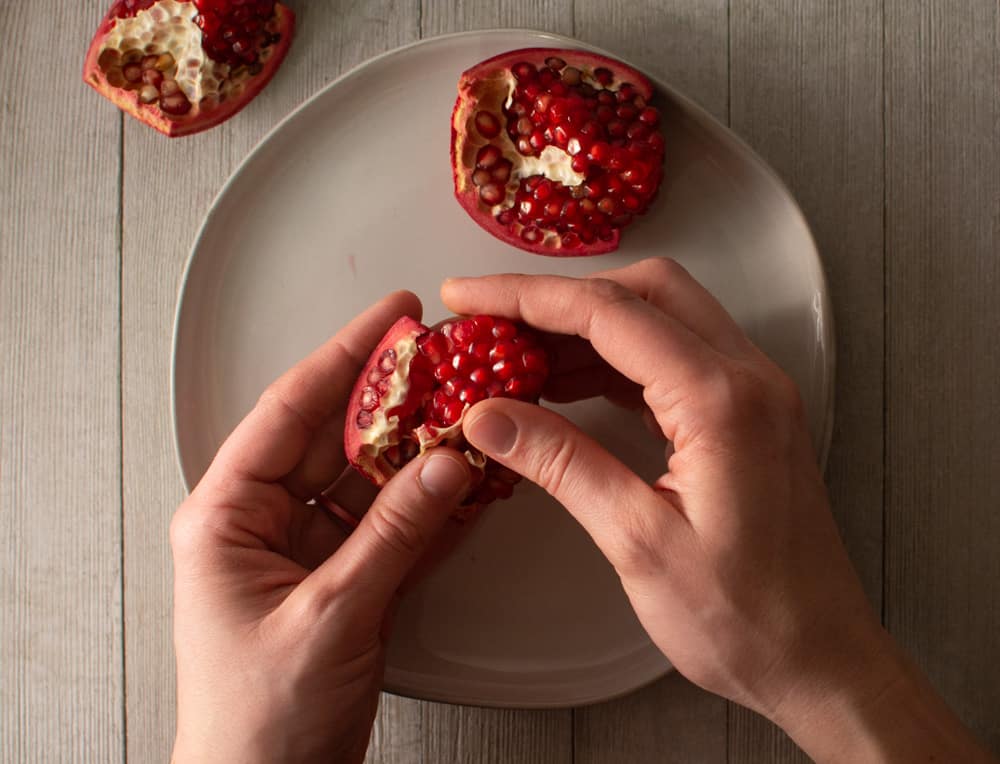
    separate section of pomegranate

    This method is similar to the last one only we are going to cut all the way through and separate the chunks of fruit.

    Cut the crown off the pomegranate, then turn it over and cut the bottom off the same way.

    Now cut down the sides of the fruit along the pith five or six times and pull the sections apart.

    Extraction

    Deseeding Method #1: The Whack
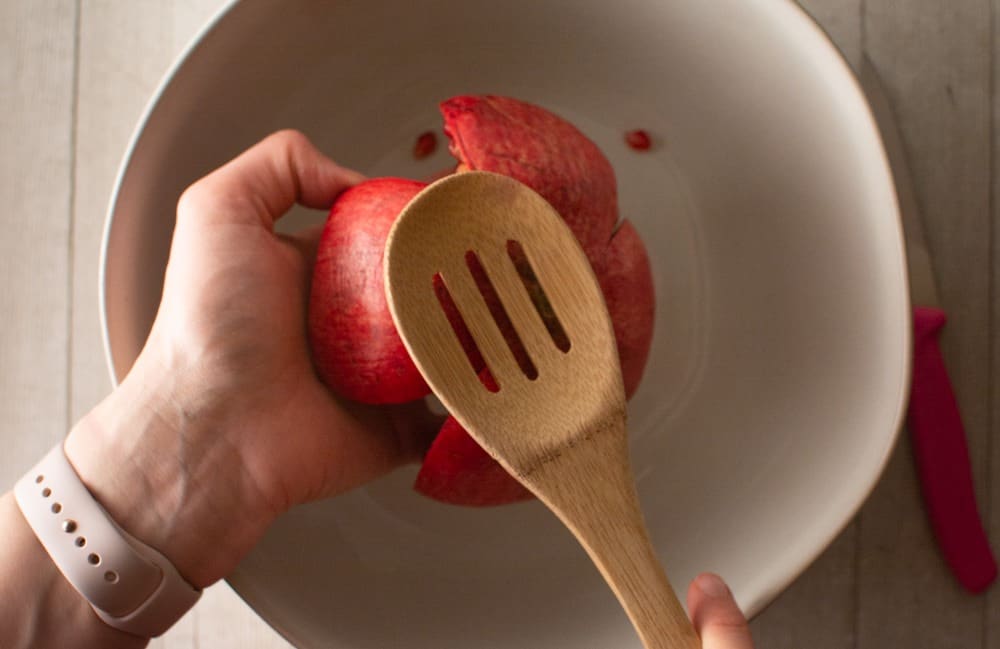
    wacking pomegranate with spoon

    This is my favorite method because it is fast and easy. Some people don’t like this method because it can be messy. I have also heard claims that it damages the seeds. But I have never had a problem with less than stellar seeds and I have whacked many a pomegranate.

    As for the mess, you do want to be careful because pomegranate juice can stain. But I have dodged all juice missiles by using a big deep bowl. Super easy. Most people I have seen struggle with this method have tried to knock the seeds out onto a plate or shallow bowl. Bad idea.
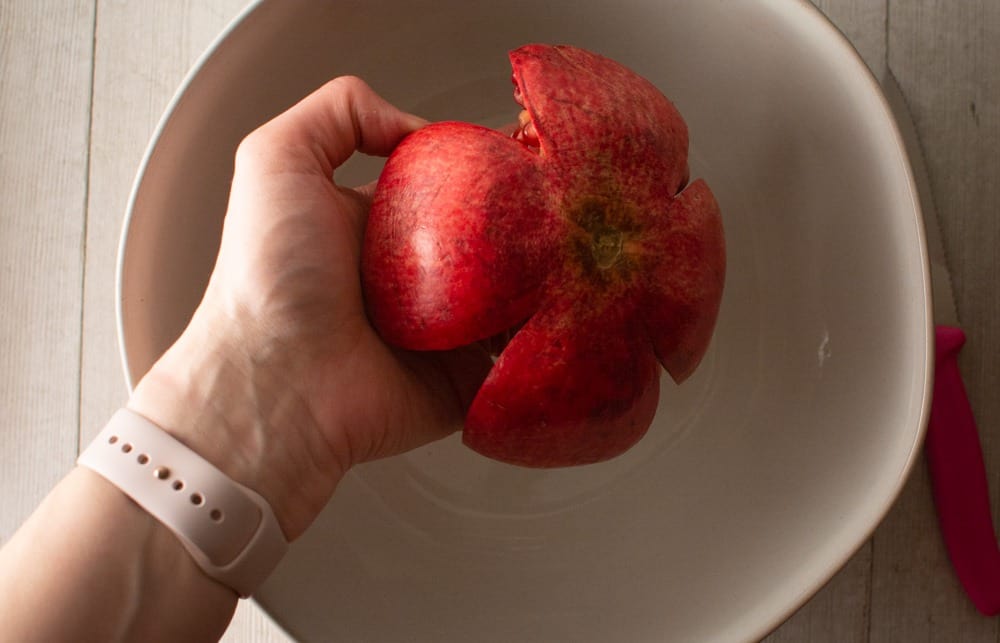
    Holding pomegranate over bowl

    If you are still worried about the mess you can easily cover the pomegranate and bowl with an old (not favorite) kitchen towel before you start whacking. Just be careful not to smack your hand in the process.
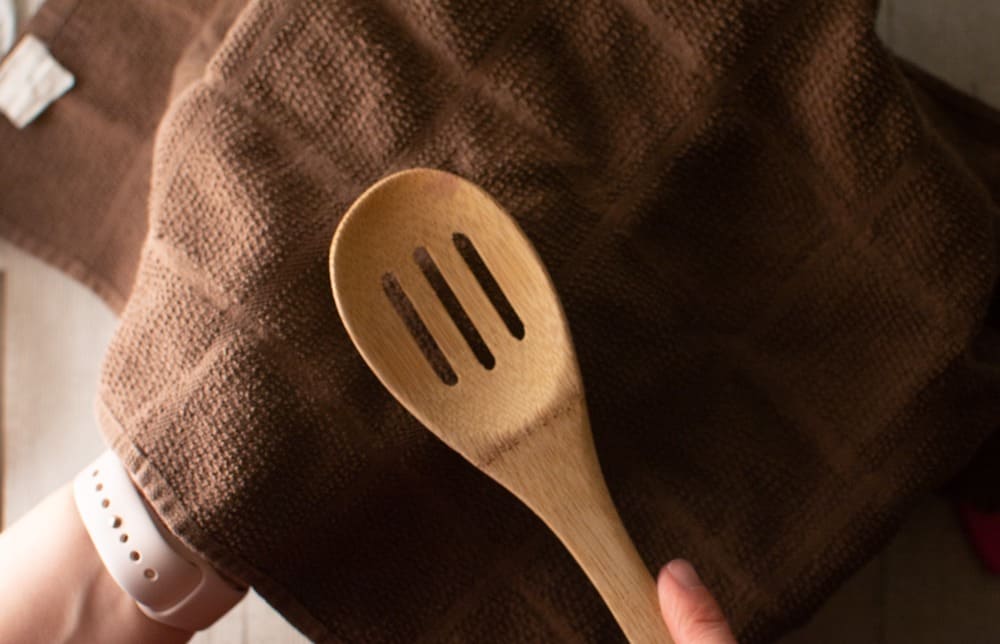
    wacking a pomegranate covered by a towel

    You’ll want to use either of the first two cutting methods before you start whacking. It is hard to whack seeds out of a small section of pomegranate so steer clear of the third method.

    Grab your pomegranate in your less dominant hand with the seed side down.

    Now, using the back of a wooden spoon, gently (unless you need to let out some frustration) whack the back of the pomegranate until all or most of the seeds fall out.

    Deseeding Method #2: Manually peeling out the seeds

    I don’t love this method.

    Like really don’t like it.

    But I have to throw it in here so you really know your options. And if it ends up being your favorite, you’re welcome.
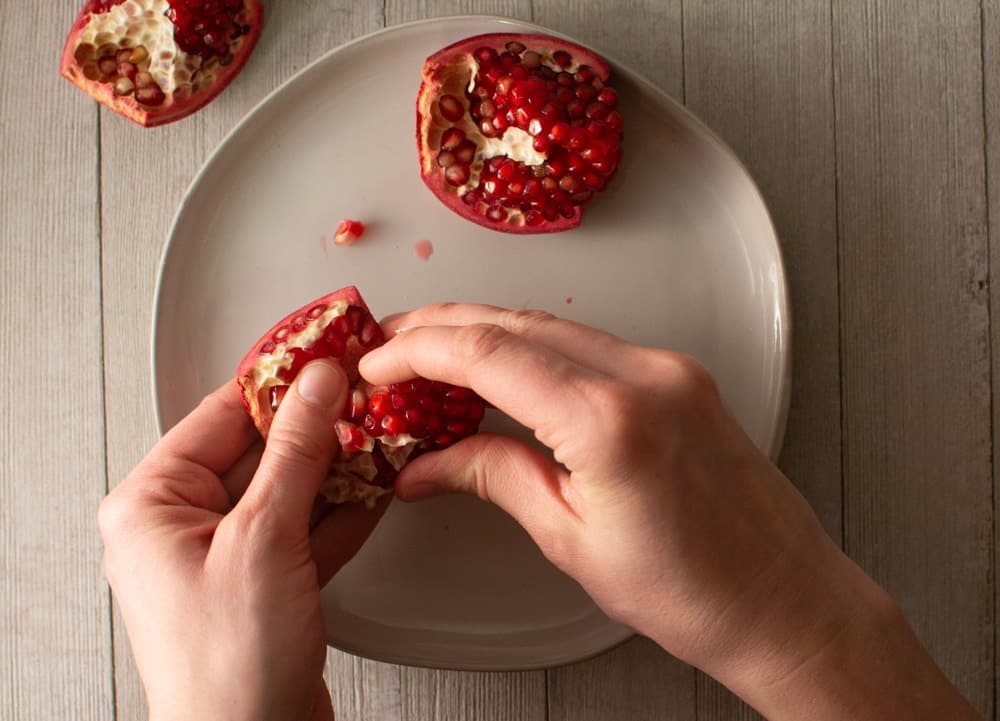
    peeling seeds out of pomegranate

    This method is for the patient as you are peeling the seeds out of the fruit with your fingers. It sounds simple and it's really not complicated. But I 100% do not enjoy doing it this way. It takes a long time and can also get messy. Like really messy.

    I have to admit that I know people (ok maybe one person) who grew up using this method and thinks that I am complicating the process. If you resonate with them then keep on keeping on.

    Deseeding Method #3: Water

    This method is supposed to be gentler on the seeds than whacking and some say that the water helps the seeds detach from their skin easier.

    You can use cutting methods 2 or 3.
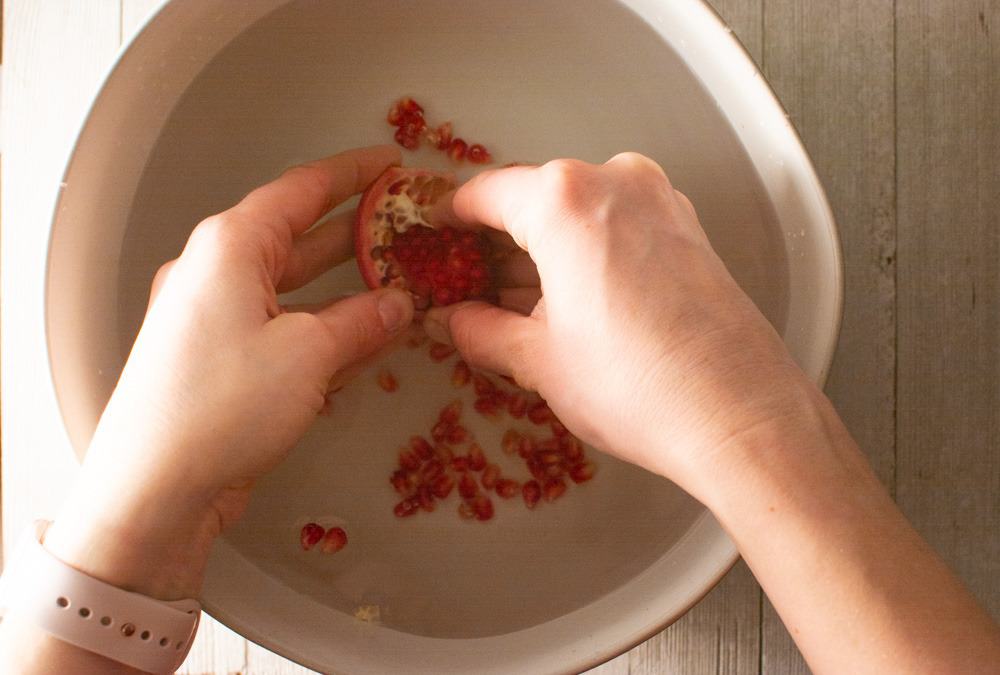
    peeling pomegranate seeds in a bowl of water

    Fill a big bowl of water and submerge the pomegranate pieces into it. With your hands and the pomegranate underwater, break the seeds out of the skin.

    The advantage of water is that the pith (the off white membrane that surrounds the seeds) that comes out with the seeds will float in the water while the seeds sink. You can easily scoop the pith out with a small mesh strainer or your hands if you want to get fancy.

    Side note: You can use water to separate pith with the other two methods as well. Just pour water over your already extracted seeds and the pith will float to the top.
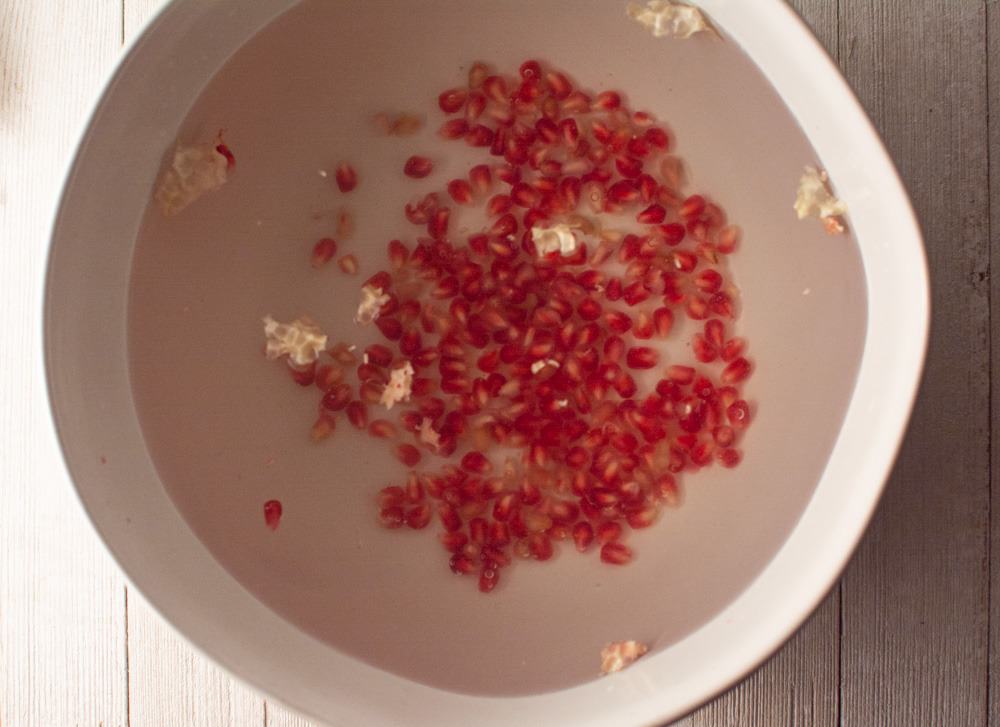
    bowl of water with pomegranate seeds in bottom and pith floating on top

    If you want to save any of the juice that might have come out while deseeding than you will want to strain it off before you pour water on the seeds. Or you can just pick the pith out with your fingers.

    Now go enjoy those juicy morsels!

    Try them in this delicious grapefruit pomegranate kale salad!

    What is your favorite method for deseeding a pomegranate? Do you have another method that I haven’t mentioned here? Let me know in the comments!

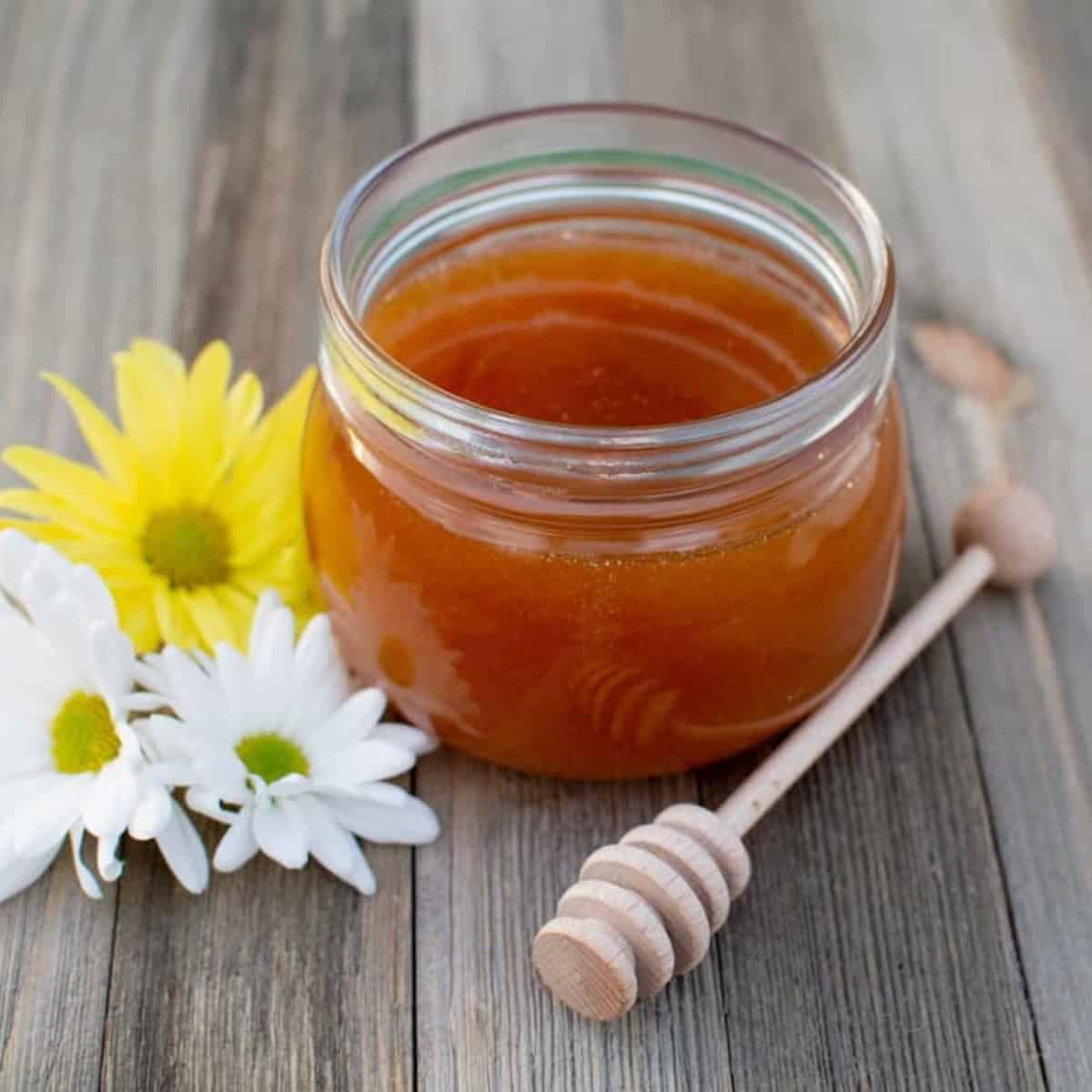
    5 Important Questions to Ask Before You Buy Honey

    June 7, 2018 by Chantry Leave a Comment

    I love to use honey in place of processed sugar. It has a long list of health benefits and is simple to substitute in recipes. To get all the benefits of eating honey it is important to buy some from a good source. I used to think it was just about whether other sugars were added to the honey before it was sold or not. While we should avoid honey that has added sugars there are also other things to watch out for. To keep it simple I created a list of 5 questions to ask before you buy honey.

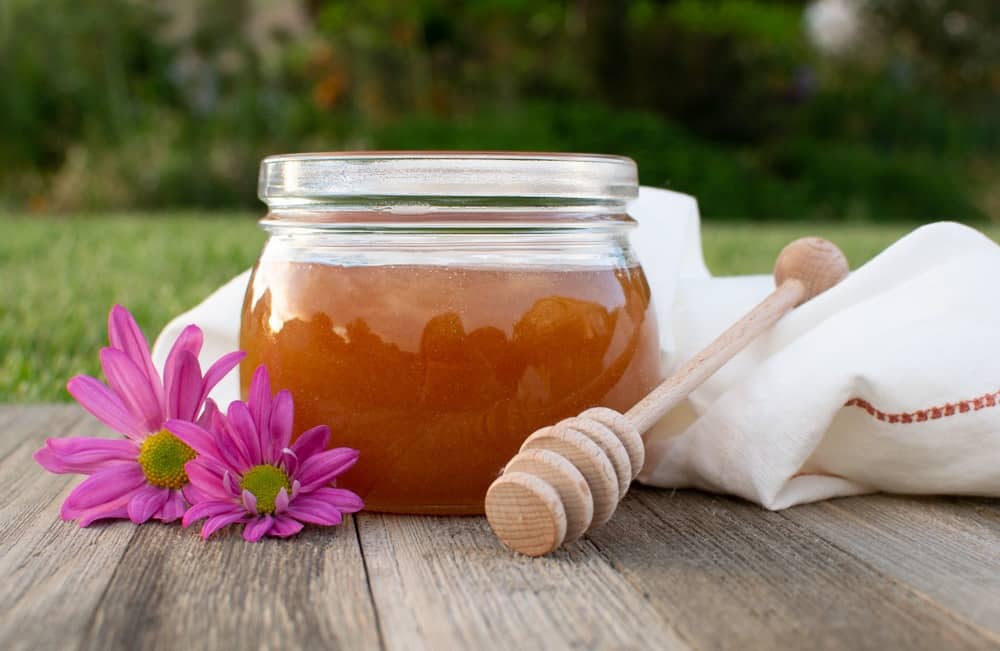
    Jar of honey

    One of my earliest memories of eating honey was my mom showing me how to eat it with butter over a slice of her fresh baked bread. I am convinced that butter and honey were one of the first matches made in heaven. Add them to fresh homemade bread and the sweet flavor and velvety texture take you to a whole other world.

    It took months for my mom to perfect her bread recipe and even now when I reach for my honey I can almost smell her bread. Many years later I still love honey served over fresh bread. Really, who doesn’t?

    Honey dipper with honey

    Besides being natures best sweetener, honey can help with allergies, boost the immune system, help promote healthy sleep, maintain healthy blood sugar, and help with coughs and sore throats. (1) I know, this list makes me giddy too! This is just a “taste” of the superpowers that belong to honey and we will talk more about them in a future article.

    The best source of raw honey would be from a local beekeeper. If that is not an option it is carried in most health food stores. I have also started to see it in a couple of normal grocery stores.

    Want to get the most out of your honey? Here is a list of questions to ask when searching for a great quality honey:

    1.  What temperature do you heat your honey to when bottling it?

    To really get the most out of your honey you need to find a good source of raw honey that hasn’t been pasteurized. Honey gets pasteurized in order to delay crystallization. However, when honey is pasteurized it loses many of its beneficial enzymes.(2) This is similar to how vegetables lose their enzymes when cooked at high temperatures.

    For honey to be raw it should not be heated higher than 95 degrees. This is the temperature of honey while it is in the hive. (3) When heated above this temperature honey starts losing its benefits.(4)  Some beekeepers don't need to heat their honey and others struggle with the time it takes to bottle without warming it up.

    2.  Where are your hives located?

    Your beekeepers may be local but that does not mean that your honey is. If you want to use raw local honey as a remedy for seasonal allergies (5) this is a very important question. Many beekeepers live locally but keep their hives in a much farther location than what you need.

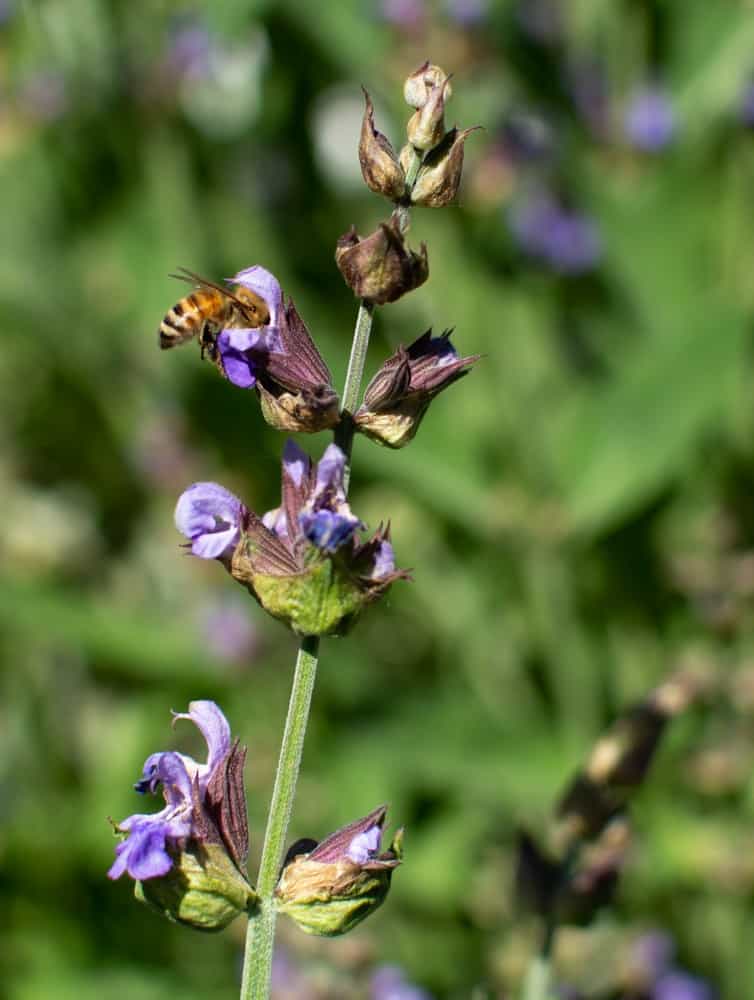
    Bee pollinating purple flower

    3.  Do you ship your bees out to pollinate?

    This question is an extension of the last question. Beekeepers often relocate their bees to other parts of the country to pollinate crops in need. This service is beneficial to farmers (and helps the beekeeper generate some extra income), but the practice is extremely taxing on the bees. The bees are confined during travel causing stress. They are exposed to chemicals used to treat the crops. And they receive limited nutrition as they are only pollinating one crop. (6)

    4.  What do you feed your bees? And when?

    When beekeepers harvest honey they are taking their bees food. Fortunately, bees often make more honey than they need. Some beekeepers try to only harvest the excess. Many beekeepers, however, take more than their bees can spare and give them some form of sugar as a replacement. There are times when it is more acceptable to feed bees sugar--including when there is not enough foraging (plants with nectar and pollen that are in bloom) available or when there is a new hive in need of some extra nourishment. Look for beekeepers who feed their bees only when necessary and with a good quality organic sugar.

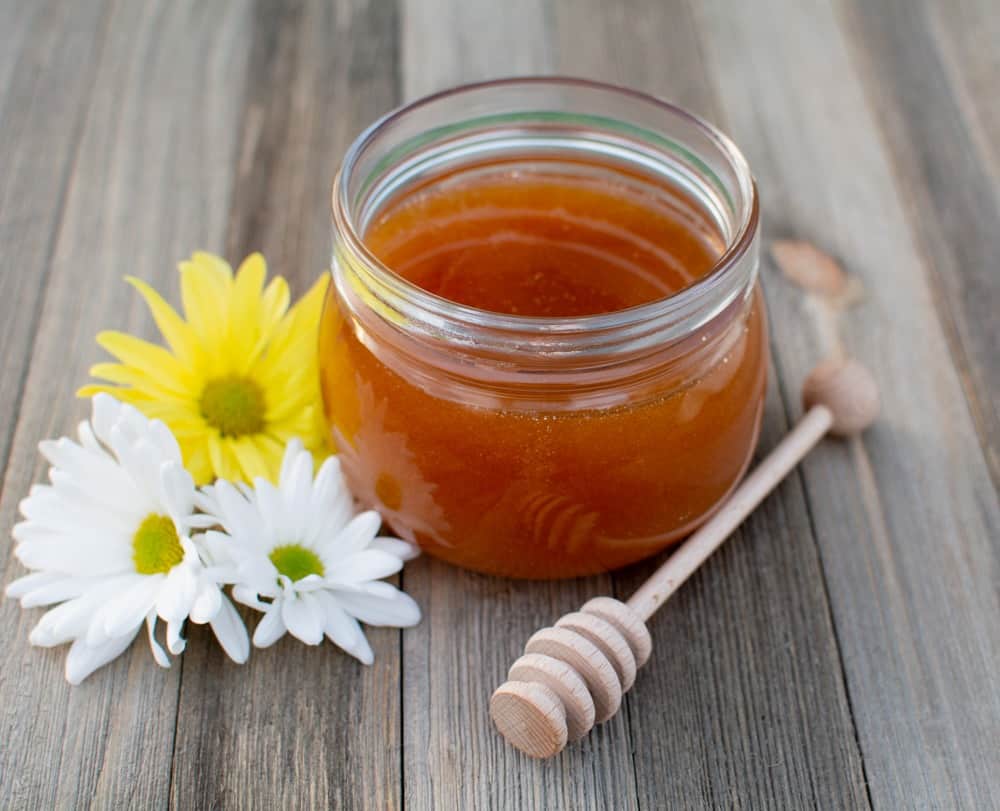
    Jar of honey on wood board

    5.  How do you deal with disease and parasites?

    I hope your beekeepers are doing everything they can to keep a strong hive of bees and consequently don't see a lot of disease and parasites. Many beekeepers use antibiotics and chemicals to treat their bees and keep them “strong.” However, there are plenty of beekeepers that believe in treatment free beekeeping. If you can find honey from treatment free beekeepers you have hit a jackpot.

    Bee on flower

    It can seem overwhelming but it doesn't need to be. The first step is to look for an organic, raw and unfiltered honey. Then you can dig deeper from there. 

    Looking for a way to enjoy your honey? Try my Honey Glazed Popcorn!

    Have you found a good source of local raw honey? Please share your favorite place to buy honey in the comments.

    SaveSave

    SaveSave

    SaveSave

    SaveSave

    SaveSave

    SaveSave

    SaveSave

    SaveSave

    SaveSave

    SaveSave

    Footer

    ↑ back to top

    About

    • Privacy Policy

    Newsletter

    • Sign Up! for emails and updates

    Copyright © 2026 Chantry's Pantry